Shade consistency has become one of the most important concerns in modern dental restorations, especially for anterior crowns and multi-unit zirconia bridges. Even when the fit is clinically acceptable, small differences in translucency or cervical color can affect the overall aesthetic result.
In the past, many laboratories relied heavily on manual staining and layering techniques to reproduce natural tooth appearance. While experienced technicians could achieve excellent aesthetics, results often depended on individual skill, furnace conditions, and repeated adjustments.
Today, multilayer zirconia has helped laboratories achieve more predictable shade transitions by integrating color and translucency gradients directly into the material itself. However, consistent results still depend on more than the zirconia block alone. Milling strategy, restoration thickness, sintering stability, and nesting position all influence the final appearance.
Producing restorations with stable and repeatable color is more complicated than simply selecting a VITA shade.
Several factors may influence the final appearance of zirconia restorations:
Material translucency
Wall thickness
Sintering temperature variation
Surface finishing
Coloring liquid penetration
Furnace loading position
Manual staining techniques
In multi-unit bridges, these differences become even more noticeable because adjacent units must appear visually balanced under different lighting conditions.
For laboratories handling high daily case volumes, maintaining the same shade outcome across different batches and technicians can become challenging.
Traditional white zirconia often required full staining or porcelain layering to create natural transitions between cervical and incisal areas.
Multilayer zirconia simplifies part of this process by incorporating gradual changes in:
Color saturation
Translucency
Strength distribution
from the cervical layer to the incisal layer.
Instead of creating the gradient manually, the material itself provides a more controlled transition after milling and sintering.
This approach may help reduce visible shade differences between units, particularly in routine crown and bridge cases.
One common reason for inconsistent crown shade is incorrect nesting position inside the zirconia disc.
Because multilayer zirconia contains different layers with varying translucency and chroma, the vertical position of the restoration directly affects the final appearance.
For example:
If the incisal area is positioned too low, the crown may appear too opaque.
If the cervical area is placed too high, the restoration may lose depth and warmth.
In multi-unit bridges, inconsistent nesting between units may create visible shade imbalance after sintering.
For this reason, experienced technicians usually pay close attention to:
Crown height
Connector position
Incisal edge placement
Disc layer mapping during CAM preparation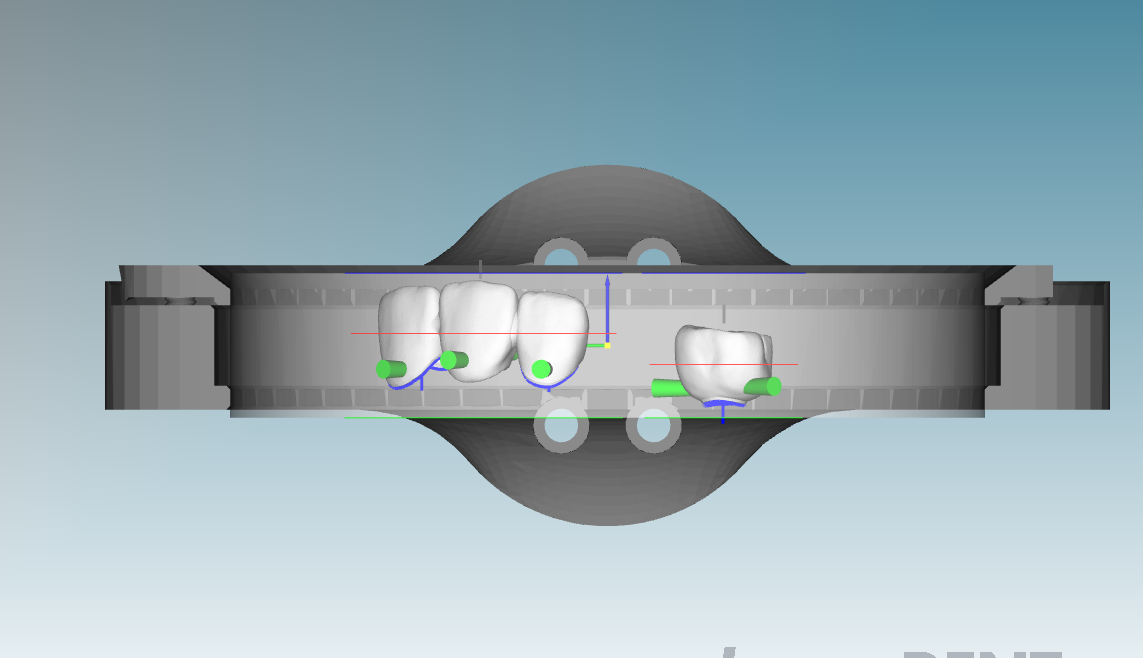
Consistent nesting strategies often improve repeatability more than machine precision alone.
Even with the same zirconia block and the same shade designation, restorations may look different if thickness changes.
Zirconia becomes more opaque as thickness increases. Areas with excessive reduction or overbuilt anatomy may therefore produce visible differences in translucency.
This is especially important in:
Anterior crowns
Veneer-style restorations
Thin incisal edges
Full-contour bridges
Many laboratories control reduction parameters carefully to maintain more uniform optical behavior throughout the restoration.
Connector design in bridges also affects how light passes through the restoration, influencing the perceived shade between units.
In zirconia manufacturing, milling is only part of the process. Final optical properties develop after sintering.
Uneven furnace temperature distribution, overloaded trays, or unstable sintering schedules may contribute to:
Shade variation
Translucency differences
Slight deformation
Surface appearance inconsistency
Full-arch and long-span restorations are particularly sensitive because temperature variation may affect different areas of the bridge unevenly.
Many laboratories now place greater emphasis on:
Furnace calibration
Stable sintering cycles
Proper restoration support
Controlled tray loading
to improve repeatability between batches.
Milling precision still matters, but mainly for preserving restoration anatomy and maintaining intended layer transitions.
Poor milling strategies or worn burs may lead to:
Chipped margins
Uneven surface texture
Inaccurate anatomy
Irregular layer exposure
Modern 5-axis milling systems help improve consistency by reducing vibration and maintaining smoother tool movement, especially in complex anatomy.
However, final shade consistency still depends more on workflow control than on theoretical machine accuracy alone.
Although multilayer zirconia reduces the need for heavy manual staining, many laboratories still apply small amounts of:
Glaze
Surface stain
Incisal characterization
particularly in high-aesthetic anterior cases.
Natural teeth contain subtle variations that cannot always be reproduced through multilayer structure alone.
As a result, multilayer zirconia is often used as a stable foundation rather than a complete replacement for technician artistry.
Long-term shade consistency also depends on material manufacturing stability.
Variations in:
Zirconia powder quality
Pigment distribution
Pressing consistency
Pre-sinter density
may affect the final result after sintering.
For this reason, laboratories often prefer zirconia suppliers with stable production processes and consistent batch control.
When material consistency improves, laboratories typically spend less time adjusting shade manually.
When combined with stable workflows, multilayer zirconia may help laboratories:
Reduce manual staining variability
Improve shade consistency across bridges
Shorten finishing time
Increase production efficiency
Achieve more repeatable aesthetic outcomes
This is particularly valuable for laboratories producing high volumes of monolithic zirconia restorations.
Multilayer zirconia has improved the predictability of modern crown and bridge production by integrating color and translucency gradients directly into the material structure.
At the same time, achieving consistent shade still depends on multiple factors beyond the zirconia disc itself. Nesting strategy, restoration thickness, sintering stability, milling quality, and finishing techniques all influence the final appearance.
Laboratories that combine stable materials with controlled digital workflows are generally better positioned to produce restorations with repeatable aesthetics and reliable long-term results.
